
The Sculptique Aesthetics
Septorhinoplasty in Mumbai: Fixing Breathing and Shape in One Surgery (2026)
The comprehensive medical and aesthetic guide to septorhinoplasty in Mumbai. How correcting a deviated nasal septum (DNS) combined with cosmetic reshaping delivers unobstructed breathing and elegant facial proportion simultaneously.
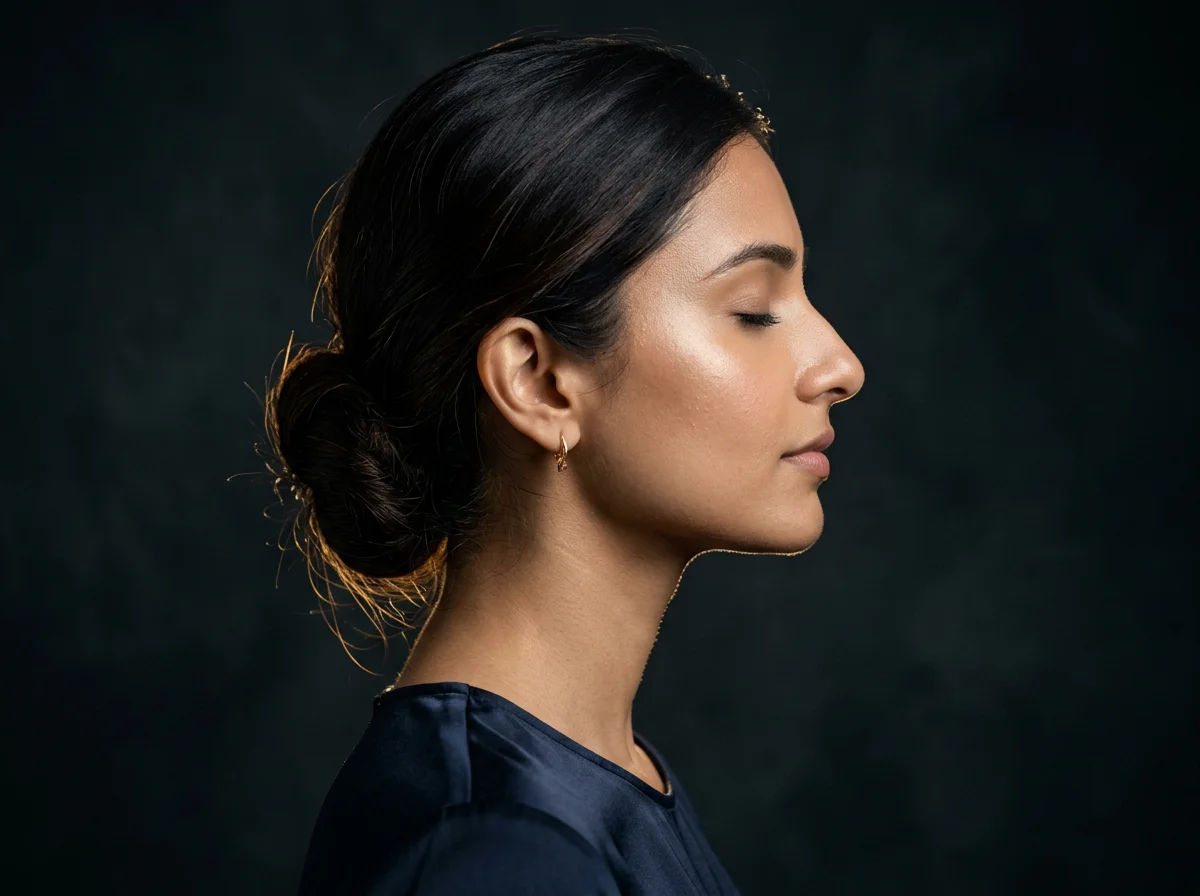
Few physical frustrations are as debilitating as struggling to breathe through your nose every single night, while simultaneously feeling unhappy with the external crookedness, asymmetry, or dorsal hump of your nasal bridge.
Many patients in Mumbai seek out an ENT specialist for a deviated septum (DNS), only to undergo a standard septoplasty that straightens internal cartilage but leaves an external crooked C-shape or dorsal bump completely unchanged. Conversely, other patients undergo a purely cosmetic rhinoplasty, only to discover that narrowing their nasal bridge collapsed their internal nasal valves, making their breathing dramatically worse than before surgery.
The gold-standard surgical solution is septorhinoplasty.
Septorhinoplasty in Mumbai combines functional airway reconstruction (septoplasty, turbinate reduction, spreader graft valve support) with meticulous aesthetic reshaping (hump reduction, tip refinement, structural alignment) within a single operative session.
At The Sculptique Aesthetics, Dr. Aamod Rao approaches the nose as an inseparable triad of form, function, and artistic proportion, ensuring patients across Mumbai, Bandra, Khar, Andheri, and South Mumbai achieve lifelong, effortless nasal breathing alongside refined facial beauty.

1. Septoplasty vs. Rhinoplasty vs. Septorhinoplasty: The Critical Differences
Understanding the anatomical boundary lines between these three procedures prevents surgical disappointment:
| Procedure | Primary Objective | Anatomical Focus | Visual Cosmetic Impact | Airway Impact |
|---|---|---|---|---|
| Septoplasty | Purely Functional | Straightens internal septum (cartilage & vomer/ethmoid bone) | None. The external bridge and tip look identical. | Clears central septum airway obstruction |
| Cosmetic Rhinoplasty | Purely Aesthetic | Reshapes nasal bones, tip cartilages, nostrils | High. Changes shape, slope, width, and tip angle. | Neutral, or risk of narrowing airway if unsupported |
| Functional Septorhinoplasty | Both Form & Function | Internal septum + external bony vault + middle vault + nasal valves | High. Straightens crooked noses, eliminates humps, balances tip. | Maximal. Widens nasal valves, corrects septal spurs, reduces turbinates. |
If your external nose is crooked or twisted like an "S" or "C", you almost certainly have an internal deviated septum tethering the external framework. You cannot permanently straighten the outside of a twisted house without first realigning its central load-bearing beam.
2. The Internal Anatomy of Nasal Obstruction
When you sit down for a consultation with Dr. Aamod Rao at The Sculptique Aesthetics, your nasal passage is evaluated endoscopically. Chronic nasal obstruction is rarely caused by a single issue; it typically involves a combination of three internal choke points:
A. The Deviated Nasal Septum (DNS)
The septum is the midline partition separating your left and right nasal cavities. When deviated—either through congenital growth or trauma (such as childhood sports injuries, falls, or vehicle accidents)—it creates a persistent mechanical blockage on one or both sides, often forming sharp bony spurs that irritate adjacent mucosa.
B. Hypertrophic Inferior Turbinates
Turbinates are curled spongy bone shelves covered by vascular mucosa on the lateral walls of the nasal cavity that warm, humidify, and filter air. In patients with a deviated septum, the side opposite the deviation often develops compensatory turbinate hypertrophy—the tissue swells massively to fill the empty space, leaving both sides blocked. In Mumbai’s humid and polluted coastal air, chronic allergic rhinitis worsens this swelling.
C. Internal and External Nasal Valve Collapse
The internal nasal valve is the narrowest point of the entire human airway (an angle of approximately 10–15 degrees between the upper lateral cartilage and the dorsal septum).
- When an inexperienced surgeon reduces a dorsal hump without placing spreader grafts, this valve angle collapses inward with every breath.
- Patients complain: "My nose looks smaller, but whenever I breathe in quickly, my nostrils suck shut."
- A functional septorhinoplasty uses bilateral cartilage spreader grafts harvested from your own straightened septum to brace and widen these valves open permanently.
Explore the surgical technique differences in open vs closed rhinoplasty and our complete guide to rhinoplasty in Mumbai.
3. Step-by-Step: How a Modern Septorhinoplasty is Performed
A comprehensive septorhinoplasty is performed under general anaesthesia and typically takes between 2.5 and 4 hours depending on structural complexity.
- Septal Dissection & Harvest: Through an open or endonasal approach, the mucoperichondrial flaps are carefully elevated. The deviated portions of cartilage and bone are precisely straightened. Excess cartilage is harvested to serve as biological building blocks (grafts) for the rest of the surgery.
- Spreader Graft Placement: Straight strips of harvested septal cartilage are carved and sutured between the septum and the upper lateral cartilages. This reconstructs the mid-vault, prevents the "inverted-V deformity", and guarantees open internal nasal valves.
- Dorsal Vault Smoothing: The bony and cartilaginous hump is shaved or sculpted using precision Piezosurgery, ensuring smooth light reflexes down the bridge.
- Osteotomies (Bone Realignment): Precision lateral cuts are made in the nasal bones to reposition a crooked bony bridge into true facial midline balance.
- Columellar Strut or Septal Extension Graft: Harvesting cartilage to anchor the nasal tip, establishing strong support so the tip never droops over time.
- Submucosal Turbinoplasty / Radiofrequency Ablation: If enlarged turbinates are present, their volume is reduced without stripping the functional mucosa, providing immediate airway clearance.
- Silicone Internal Splinting: Instead of traumatic gauze packing, soft silicone Doyle splints with hollow airway channels are placed inside the nose to hold the septum in position while allowing you to breathe immediately upon waking.
4. Realistic Recovery Timeline: Breathing, Bruising, and Swelling
Patients are often surprised to learn that functional septorhinoplasty is far less painful than anticipated; the primary post-op sensation is feeling like you have a heavy head cold or sinus pressure.
| Phase | What You Experience | Practical Patient Guidelines |
|---|---|---|
| Days 1–3 | Nasal congestion, mouth dryness, mild periorbital bruising | Sleep with head elevated on 2 pillows; apply cold gel packs around eyes; take prescribed analgesics and saline mists. |
| Day 7 | External thermoplast splint and internal silicone Doyle splints removed | The Milestone Day: Removing internal splints provides an immediate rush of air. Your first look at your refined bridge. |
| Weeks 2–3 | Bruising disappears; 70–80% of internal mucosal swelling subsides | Return to office, social dinners, and non-strenuous desk work. You can resume light walking. |
| Weeks 4–6 | Nasal bones fully fuse in their new position | Clearance for light gym, non-contact fitness, and swimming. No heavy contact sports yet. |
| Months 3–6 | Internal breathing becomes effortless and clear | Airway reaches optimal capacity; morning sinus headaches and mouth-breathing snoring resolve. |
| Months 12–18 | Complete tip refinement and tissue softening | The final aesthetic and functional stability is permanently established. |
Practical Advice for Mumbai Patients:
- Saline Irrigation: Mumbai's dust and coastal air can form dry crusts around internal dissolvable sutures. Commencing gentle sterile saline nasal rinses 3 to 4 times daily from Day 8 onwards accelerates healing and prevents nasal odor.
- Eyewear Restrictions: No heavy reading glasses, spectacles, or sunglasses resting on the nasal bridge for 6 weeks. Taping them to the forehead or switching to daily contact lenses protects bone healing.
Learn more about recovery timelines in our dedicated article on rhinoplasty recovery time in Mumbai.
5. Cost of Septorhinoplasty in Mumbai (2026 Price Factors)
Because septorhinoplasty combines both extensive functional airway surgery and complex aesthetic reconstruction, the surgical investment reflects two procedures executed in one operative sitting:
- Average Price Range in Mumbai: Typically ranges between ₹2,00,000 and ₹4,00,000+ depending on anatomical complexity, prior surgeries, and whether rib or ear cartilage grafts are required.
- Insurance Coverage: In India, many health insurance policies cover the functional component (septoplasty and turbinoplasty for documented airway obstruction), while the cosmetic component (rhinoplasty, hump reduction, tip refining) is self-funded. At The Sculptique Aesthetics, our administrative coordinators assist with detailed itemized documentation for cashless or reimbursement claims where applicable.
Review our in-depth financial guide on nose job cost in Mumbai: what influences pricing.
6. Frequently Asked Questions (People Also Ask)
Will septorhinoplasty stop my chronic snoring?
If your snoring is primarily caused by nasal valve collapse, deviated septum, or hypertrophic turbinates forcing you into mouth-breathing, septorhinoplasty can dramatically reduce or eliminate snoring. However, if your snoring is caused by soft palate laxity, a retrognathic jaw, or obstructive sleep apnea (OSA), a multidisciplinary sleep evaluation is recommended.
Is septorhinoplasty more painful than a regular nose job?
No. Most patients report very little sharp pain. Discomfort is primarily due to sinus congestion, pressure behind the eyes, and a dry throat from mouth-breathing during the first few days while internal splints are in place. These symptoms are readily controlled with routine oral medications.
What happens if I sneeze after surgery?
Sneezing is a natural reflex, but sneezing with your mouth closed spikes internal nasal pressure, which can provoke bleeding or displace newly placed cartilage grafts. If you feel a sneeze coming, simply sneeze with your mouth wide open like a cough to vent the pressure harmlessly.
When will I be able to breathe normally through my nose?
You will experience an immediate improvement when the internal silicone splints are removed on Day 7. However, internal mucosal swelling fluctuates over the next 4 to 8 weeks, especially in air-conditioned or humid environments. Consistent, unobstructed nasal breathing is typically stabilized by month 2 to 3.
Can septorhinoplasty correct a nose broken years ago?
Yes. Post-traumatic nasal deformities are among the most frequent cases treated at The Sculptique Aesthetics. Even if the injury occurred a decade ago during childhood or athletics, the fused crooked bones can be osteotomized (safely fractured and repositioned) and the twisted septum straightened.
How does this differ from an ethnic rhinoplasty?
An ethnic rhinoplasty for the Indian nose focuses on the artistic and structural nuances of South Asian features (thick skin, lower bridge, broad tip). In practice, almost all ethnic rhinoplasties performed in India are also functional septorhinoplasties, because structural cartilage grafts harvested from the septum are needed to build tip support.
What is the risk of an "empty nose syndrome"?
Empty nose syndrome (ENS) is a rare, devastating sensation of nasal suffocation caused by outdated, aggressive surgeries that amputated entire turbinates. At The Sculptique Aesthetics, conservative submucosal turbinoplasty and radiofrequency remodeling are performed, preserving the physiological mucosal tissue and nerve receptors, completely eliminating the risk of ENS.
Can I travel or fly home after my septorhinoplasty in Mumbai?
If you are visiting Mumbai from overseas or another Indian city, we advise staying in Mumbai for at least 8 to 10 days. This allows Dr. Rao to personally remove the external splint, gently suction internal crusts, verify clean airway healing, and clear you safely for cabin pressurization before you fly home.
Transform Your Airway and Your Profile
You should never have to sacrifice breathing freely just to have a beautiful nose—nor should you settle for a straight septum that leaves an unsightly external hump untouched.
Schedule your comprehensive functional and aesthetic airway consultation with Dr. Aamod Rao at The Sculptique Aesthetics, Mumbai.


