
The Sculptique Aesthetics
Breast Implant Size Guide: CC, Profiles & How to Choose the Right Size (Mumbai 2026)
The complete breast implant size guide - what cc means, how cc maps to cup size, implant profiles (low, moderate, high, extra-high), base width, and how to choose the right implant for your frame. Sizing method, examples and FAQs from The Sculptique Aesthetics Mumbai.
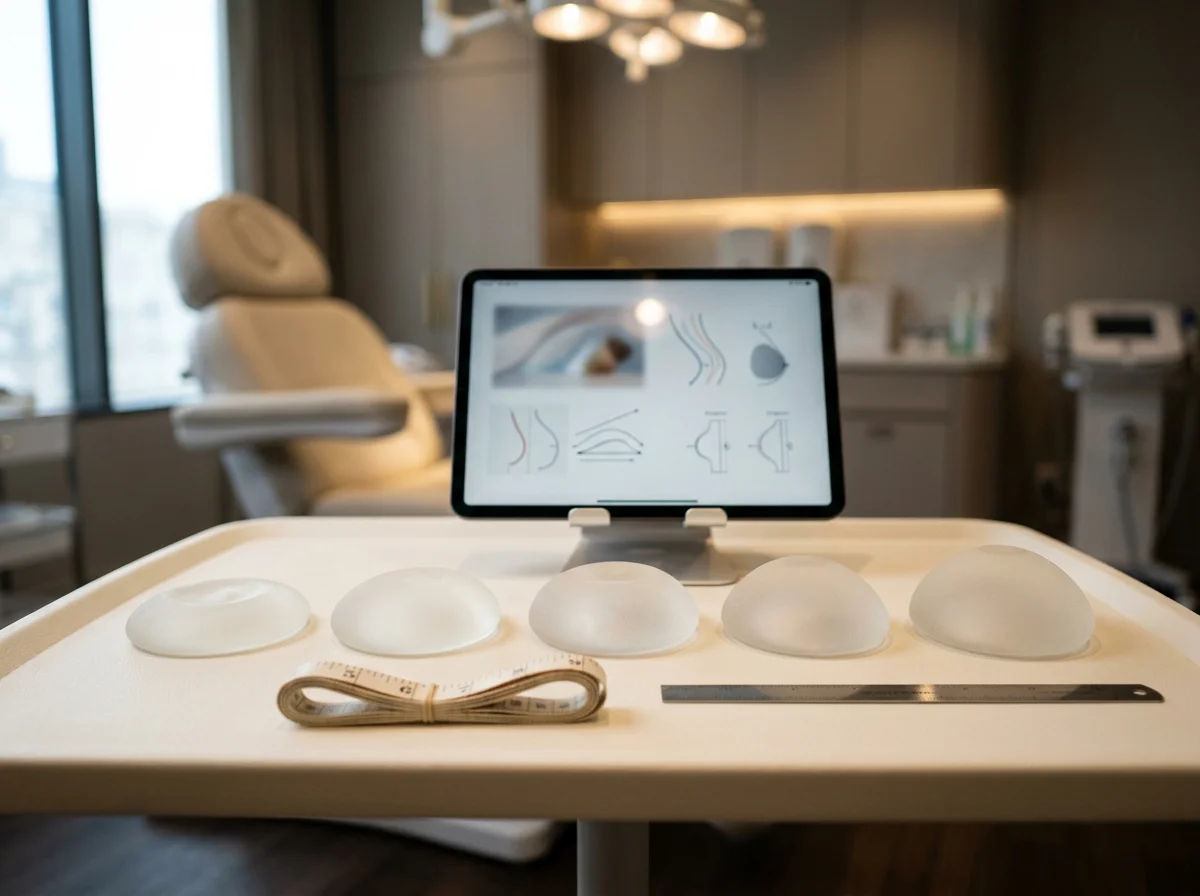
Breast implant size is the single decision that worries patients most before breast augmentation - and the one most often misunderstood. Implant size is measured in cubic centimetres (cc), not cup sizes, and the same cc will look completely different on two different women depending on their chest width, tissue cover and the implant profile chosen. Getting cc, profile and base width matched to your frame is what produces a natural, proportionate result instead of a "done" or "too big for my body" look.
If you're searching for breast implant size guide, how many cc for a C cup, 300cc vs 400cc, breast implant profiles explained, what implant size suits my frame, or moderate vs high profile implants, this guide covers the full sizing system. The Sculptique Aesthetics performs breast augmentation with implant sizing tailored at consultation in Mumbai, Bandra, Khar, Andheri, South Mumbai and across India.

This is an educational reference. Your exact implant is selected at consultation using sizers, base-width measurement and photographs - not from a chart alone.
What does "cc" mean in breast implants?
cc stands for cubic centimetre - a measure of volume, not cup size. A 350 cc implant holds 350 cubic centimetres of silicone gel or saline. Implants are manufactured in steps (typically 25–50 cc apart) from roughly 120 cc to 800 cc.
There is no fixed cc-to-cup conversion because bra cup size is relative to band size and varies between brands. As a rough working guide on an average frame:
| Implant volume | Approximate cup increase |
|---|---|
| 150–200 cc | About 1 cup size |
| 250–300 cc | 1 to 1.5 cup sizes |
| 350–400 cc | About 2 cup sizes |
| 450–550 cc | 2 to 3 cup sizes |
| 600 cc+ | 3+ cup sizes |
The most commonly chosen range worldwide is 300–450 cc, which on a typical frame moves a patient toward a C–D cup. Petite patients may achieve the same visual jump with less volume; broader or taller patients may need more cc for the same proportional change.
Breast implant profiles explained
Profile describes how far the implant projects forward from the chest for a given volume. Two implants can both be 350 cc but look entirely different because one has a wide base and low projection, the other a narrow base and high projection.
| Profile | Base width | Projection | Best suited to |
|---|---|---|---|
| Low / Low-Plus | Widest | Lowest | Broad chest, wanting subtle, very natural fullness |
| Moderate | Medium | Medium | Medium frame; balanced, natural look - the most common choice |
| High | Narrower | High | Narrow/petite frame, or wanting more upper-pole fullness and cleavage |
| Extra-High / Ultra-High | Narrowest | Highest | Narrow chest wanting maximum projection and a fuller, rounder look |
Key principle: for the same cc, a higher profile gives more forward projection and cleavage but a narrower footprint; a lower profile spreads volume across a wider base for a flatter, more natural slope. Profile is chosen from your chest base width, not personal preference alone.
Base width - the measurement that actually decides your implant
The most important number your surgeon takes is breast base width (the horizontal distance across your natural breast footprint, usually 11–14 cm). The implant base diameter should fit within your natural footprint:
- An implant wider than your chest causes the edges to be visible, lateral fullness when lying down, and a "side-set" look
- An implant narrower than your chest leaves a gap and an unnatural, pinched appearance
Once base width sets the implant family, volume and profile are selected within that constraint - which is why two patients asking for "400 cc" can correctly end up with different profiles. This is the difference between a result that looks born-with and one that looks bought.
How to choose your breast implant size
A reliable sizing process at The Sculptique Aesthetics follows these steps:
- Measure base width and tissue characteristics - sets the implant family and maximum safe volume
- Define your goal in words and photos - "natural and proportionate" vs "full and round on top" point to different profiles
- Sizer try-on - silicone sizers placed in a non-padded bra under a fitted top so you see real-world projection and cleavage
- Volume-to-look translation - we explain what each cc/profile combination will realistically deliver on your tissue, including how much upper-pole fullness to expect
- Account for tissue stretch and settling - implants "drop and fluff" over 3–6 months; the day-1 look is not the final look
- Reconcile with lifestyle - runners, lifters and back-sensitive patients are often best with moderate volumes
The single biggest sizing mistake is choosing by cup-size goal alone. Choose by proportion to your frame - see before and after: what makes results look natural.
Sizing examples
- Petite frame (base width ~11.5 cm), wants noticeable but natural: ~275–325 cc, high profile - narrow base fits the chest, projection delivers the visible change
- Average frame (base width ~12.5 cm), wants a balanced C–D: ~350–400 cc, moderate profile - the most frequently chosen combination
- Broad/athletic frame (base width ~14 cm), wants natural fullness: ~400–475 cc, low-plus or moderate - volume spread over a wide base to avoid an over-projected look
These are illustrations only. Your numbers come from measurement, not estimation.
Will bigger implants cause problems?
Oversized implants relative to your tissue carry real long-term costs:
- Faster tissue thinning and sagging under sustained weight
- Higher revision rate (bottoming-out, rippling, malposition)
- Visible rippling, especially with thin tissue cover
- Shoulder/back strain - the same complaint many breast reduction patients present with
Choosing within your tissue's capacity protects the longevity of the result. See also how long do breast implants last and breast implant illness: myth or reality.
Implants vs fat transfer for size change
For modest, very natural size increase, fat transfer is an alternative to implants - no implant, but a smaller volume gain and reliance on adequate donor fat. Implants give larger, more predictable, more controllable size changes. We compare the two fully in implant vs fat transfer breast augmentation.
Frequently asked questions
There is no fixed conversion. On an average frame, roughly 300–375 cc of added volume tends to produce a C cup, but starting tissue and chest width change this significantly. Sizers on your body are far more accurate than any chart.
Globally the 300–450 cc range is most chosen, with moderate profile the most common profile. The "right" size is always relative to your frame, not a popular number.
For the same cc, high profile has a narrower base and projects further forward (more cleavage/upper-pole fullness); moderate profile has a wider base and a more natural slope. Profile is matched to your chest base width.
Implants can be exchanged for larger ones later via breast implant revision surgery, but every revision carries cost and surgical risk and progressively stretches tissue. It's better to get sizing right the first time.
Larger implants under the muscle generally mean more early tightness and a slightly longer comfortable-recovery window. Full timeline in breast augmentation recovery: week-by-week.
Heavier implants relative to your skin and tissue accelerate stretch and descent over time. Right-sizing to your tissue is the main protection against early sagging.
Base-width measurement plus a sizer try-on under a fitted top is the most reliable predictor. Book a consultation and you can physically see several options before deciding.
Building your personalised sizing plan in Mumbai
A sound implant-size plan is built, not picked off a chart:
- Measure base width and tissue cover - sets the implant family and safe volume ceiling
- Define the look in words and reference photos
- Try sizers under a fitted top, in front of a mirror
- Choose profile from chest width, then volume within it
- Plan for settling over 3–6 months
- Sanity-check against lifestyle and long-term tissue health
We run exactly this process for every breast implant patient, and combine it with breast lift when sagging is also present - see breast augmentation vs lift vs both.
Book your breast augmentation sizing consultation in Mumbai
Want to see what different cc and profiles actually look like on your frame? Contact us at The Sculptique Aesthetics for a sizing consultation with measurement and sizer try-on. We'll translate "the size I want" into the implant that will look right on your body - and stay looking right over time.
Serving patients across Mumbai, Bandra, Khar, Andheri, Powai, Juhu, South Mumbai and international patients travelling to India for breast augmentation.


